See him for yourself.
The figure is on free public land, year-round. Here’s everything you need.
Getting there.
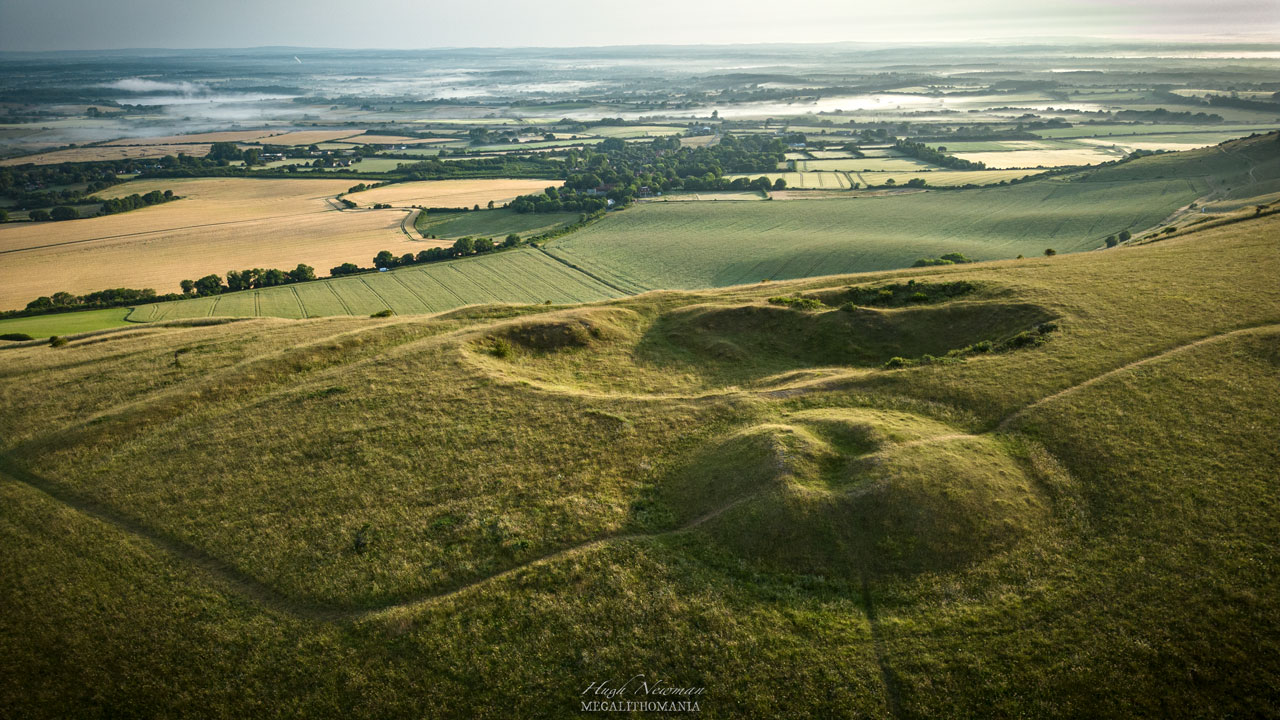
From the village to the foot of the hill.
The car park is at the end of the lane through Wilmington, signposted from the A27. From there, a chalk path runs north-east through fields for about ten minutes until the figure rises on your left, the whole of him visible at once.
Stay on the marked path: the slope above the figure is fragile and lined with sheep tracks. The best photographs are from the foot of the hill, not the top — the figure is foreshortened from above and looks squat and broad, but from the path he resolves into proper proportions.
Allow at least an hour for a proper visit: ten minutes there, twenty minutes at the figure, ten minutes back, and twenty for the village and the church.
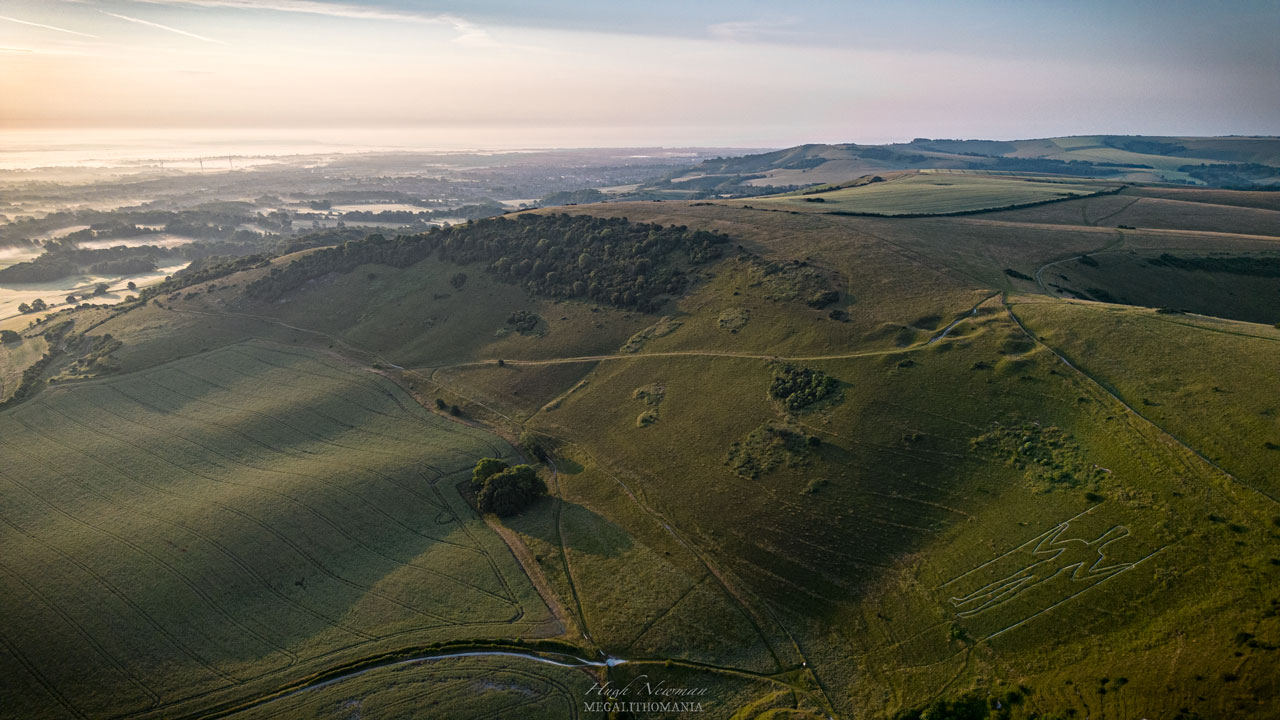
Light is the real subject.
The figure is north-facing, which means he is in shadow most of the day — and that is part of the experience. The best time to see him is at low sun: the hour after sunrise in summer, the hour before sunset in winter, when the line of his outline picks up a long thin shadow that defines his form.
If you can be at the foot of the hill for the summer solstice sunrise, you should do it once. The cross-quarter days — Imbolc, Beltane, Lughnasadh, Samhain — each have their own behaviour of light, and a sustained visiting practice across the year is the closest thing to reading the figure as he was meant to be read.
Be at the foot of the hill for the summer solstice sunrise, once.
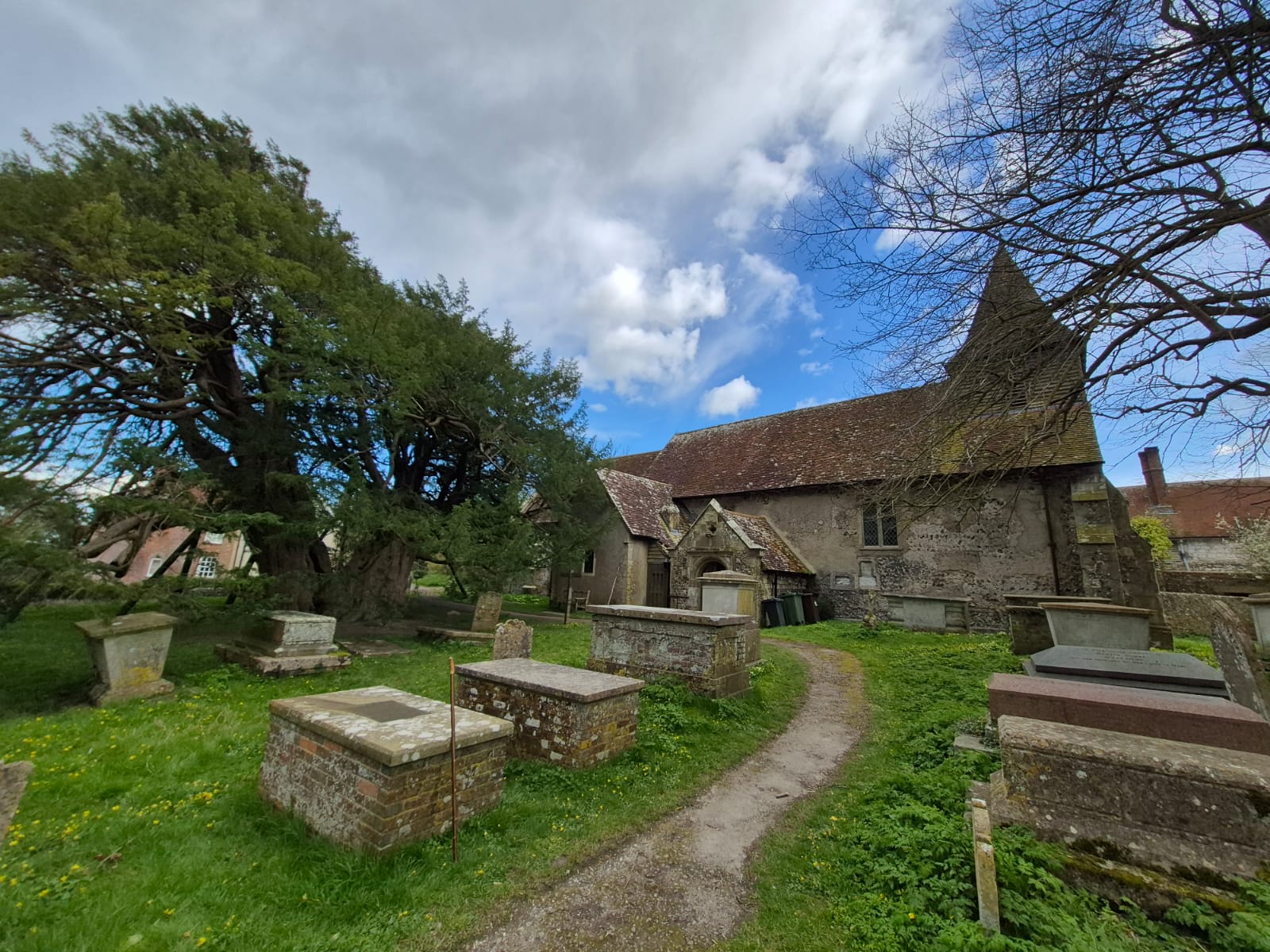
The village, priory and yew.
Wilmington is a small village — a single street, the church, the ruined priory, and one of the oldest yew trees in England, possibly older than the figure himself. The church is usually open during daylight hours; the priory is in the care of the Sussex Archaeological Society and has a small museum about the figure.
The yew is in the churchyard. Sit under it for a while.
Background reading.
The figure, the chapters, the book.