A figure of the record.
The documents, the surveys, and the silences between them. What we can prove, and where the proof gives out.
A documentary history, with gaps.
Of the three threads, history is the most apparently solid — and the most unexpectedly unstable. The Long Man enters the written record extraordinarily late: the earliest unambiguous depiction is John Rowley’s field sketch of 1710, drawn while he was surveying for the second edition of his county map. Before that there is silence, and after that there is competing interpretation.
This chapter walks through what the documents do and don’t say — charter records, parish accounts, antiquarian sketches, twentieth-century excavations — and tries to mark the limits of what an honest documentary history can claim.
The 1710 sketch.
John Rowley’s sketch is not a casual jotting. He was a paid land surveyor, working for the second edition of Saxton’s county atlas, and his field-book is full of tidy bearings and fence-by-fence measurements. The page that contains the figure is unusual only in that it includes a person at all — no other antiquarian curiosity makes it into his working notes.
What is striking about the sketch is what is not in it. The figure is shown holding two upright objects which Rowley does not call staves: he labels them simply “two posts”, and the proportions of the figure are markedly different from the figure as we now see him. Whether Rowley drew badly, drew accurately a different figure, or drew an accurate figure that was later re-cut to the modern proportions, is the question on which the rest of the documentary history turns.
What is striking about the sketch is what is not in it.
Priory, parish, and boundary.
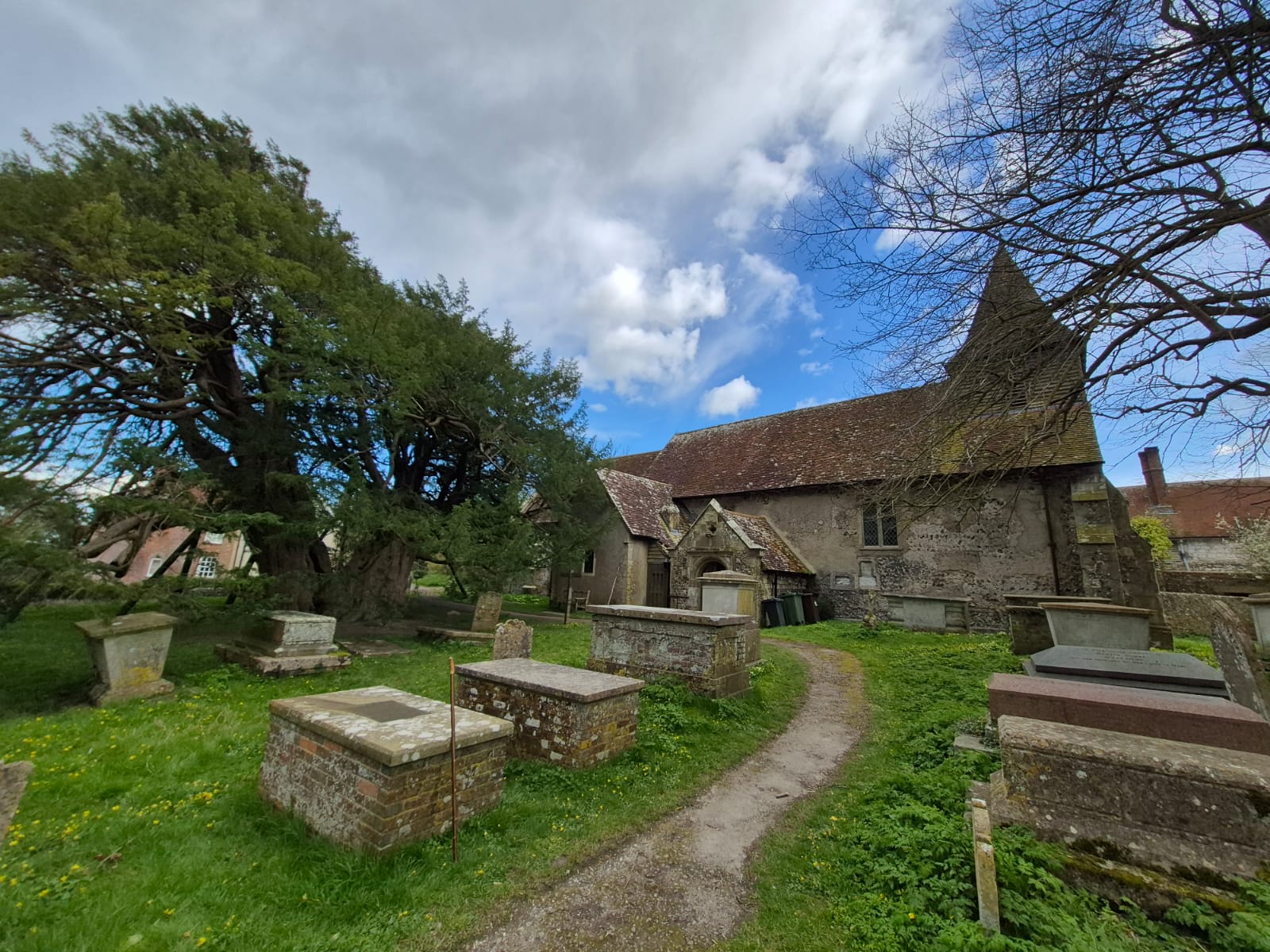
Wilmington Priory was founded in the eleventh century as a cell of the Norman abbey of Grestain, and the surviving cartulary — the medieval book of estate records — was published in transcript in the late nineteenth century. The cartulary is rich in boundary detail: it names the streams, the trees, the standing stones, the field corners. It does not name a giant on the hill.
That silence is significant but not conclusive. Boundary records name only the points on the boundary; the figure stands on the slope above the boundary, not on it. Argument from absence has been pushed too hard in both directions in the literature, and the cartulary is best read as confirming only that the figure was not part of the priory’s estate furniture — not that he didn’t exist.
The antiquarian re-shaping.
The figure as we see him today is, in important ways, a Victorian and Edwardian reconstruction. Between Rowley’s sketch and the first photographs of the early twentieth century, the figure was re-cut several times — by the Burrell family in the 1870s, by Sir Charles Cuming in the 1900s, and by a series of antiquarian gentlemen who each took the licence of “restoring” what they thought he had originally been.
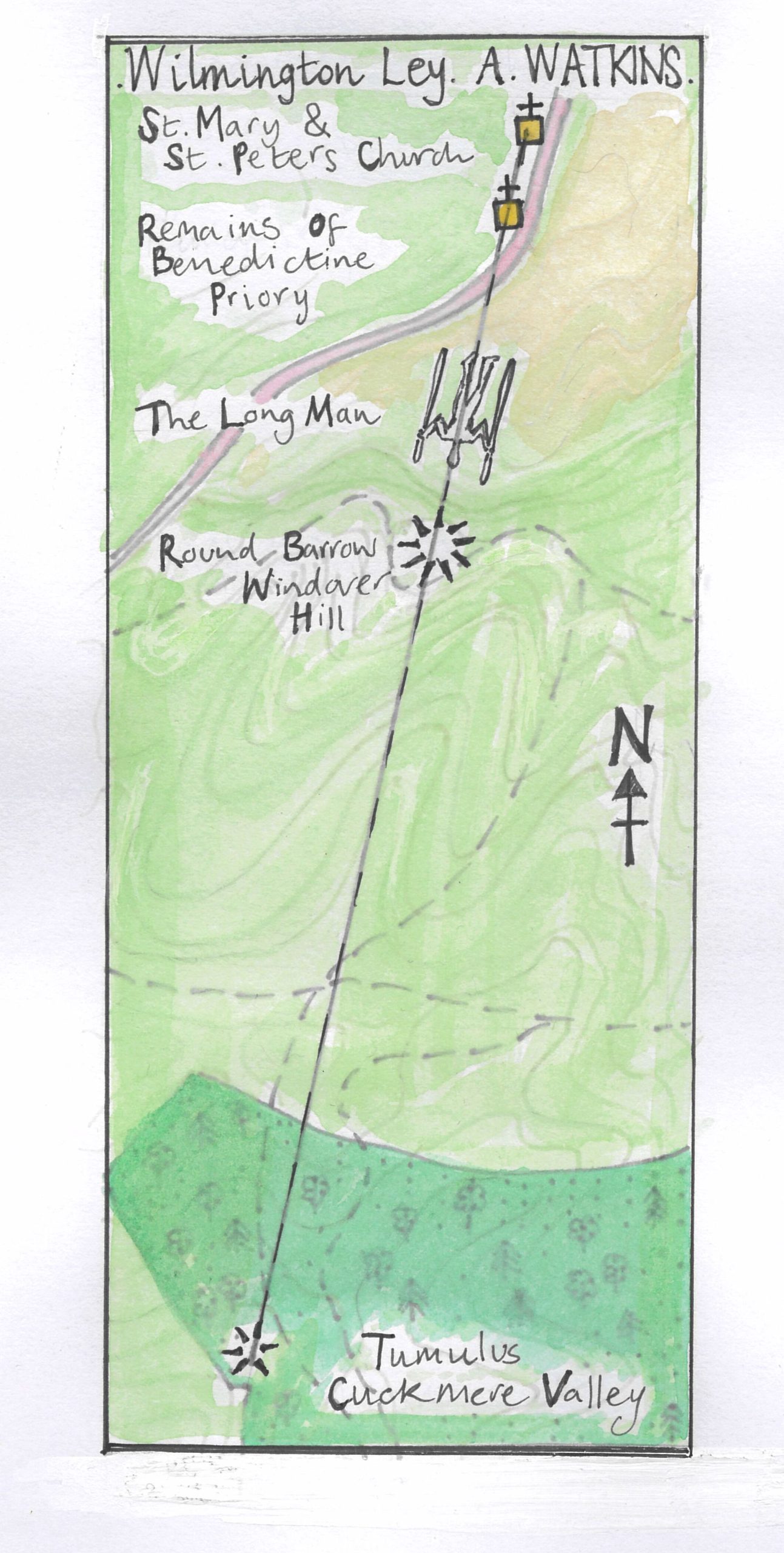
Alfred Watkins, who saw the figure in the 1920s and incorporated it into his ley-line theory, was working with a figure already shaped by sixty years of “restoration”. His drawings — clean, tall, geometrically balanced — reflect what he saw, but what he saw was already an interpretation.
This matters more than it sounds. Almost every attempt to date the figure by his proportions, to read meaning into the angle of his staves, or to align him with astronomical events, is working from twentieth-century geometry imposed on what may have been a different original. A serious history has to acknowledge this layer of distortion before it can argue anything else.
A serious history has to acknowledge this layer of distortion before it can argue anything else.
The honest position.
What survives the documentary scrutiny is modest but not nothing. The figure existed by 1710. The land around him was settled and recorded by the eleventh century without recording him. The figure as we see him is not the figure of 1710. The proportions, the staves, and the chalk-line treatment are all to some extent reconstructions of what successive viewers thought the original ought to have been.
That is the floor on which the other two threads — mythology and archaeoastronomy — have to build.
Continue with Mythology.
Thread II — folk traditions, giants, and pilgrims.